


Up To 30% Off Full-Price Items
Shop now
Up To 50% Off Winter Sale
Shop now
Ski & Snowboard Gear On Sale
Shop up to 40% off
Zamberlan Hike & Camp
24 results


Zamberlan
Free Blast GTX Pro Hiking Shoe - Men's
3 colors
$275.00
(3)

Zamberlan
Thunder GTX Boot - Men's
2 colors
Current price: $210.00 - $280.00 Original price: $350.00
Up to 40% off
Winter Sale

Zamberlan
Meister GTX RR S3 Hiking Boot - Men's
1 color
Current price: $292.50 Original price: $450.00
35% off
10% Cashback Eligible
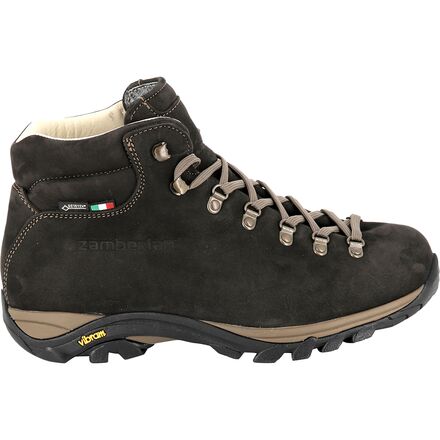
Zamberlan
Trail Lite EVO GTX Boot - Men's
1 color
$325.00

Zamberlan
Circe Low GTX Shoe - Women's
1 color
Current price: $200.00 - Original price: $260.00
Up to 23% off
Winter Sale

Zamberlan
Vioz Lux GTX RR Boot - Men's
1 color
$425.00
10% Cashback Eligible
(1)

Zamberlan
Vioz Lux GTX RR Wide Boot - Men's
1 color
$425.00
10% Cashback Eligible

Zamberlan
Vioz GTX Boot - Men's
2 colors
$375.00 - $390.00
(2)

Zamberlan
Free Blast Pop Shoe - Men's
3 colors
Current price: $160.00 Original price: $200.00
20% off
Winter Sale
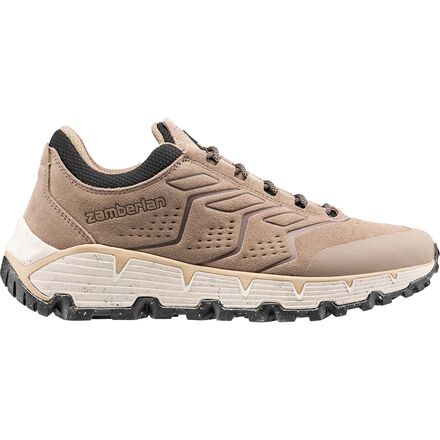
Zamberlan
Metropolis Shoe - Men's
1 color
Current price: $140.00 - $160.00 Original price: $200.00
Up to 30% off
Winter Sale

Zamberlan
Devero Low GTX Shoe - Men's
1 color
Current price: $176.00 Original price: $220.00
20% off
Winter Sale
(1)

Zamberlan
Tofane NW GTX RR Boot - Women's
1 color
$500.00
10% Cashback Eligible

Zamberlan
Baltoro Lite GTX Boot - Men's
1 color
$390.00 - $400.00
(1)

Zamberlan
Thunder GTX Boot - Women's
1 color
Current price: $280.00 Original price: $350.00
20% off
Winter Sale
(1)

Zamberlan
Trail Lite EVO GTX Boot - Women's
1 color
$325.00
(1)

Zamberlan
Muir RR Approach Shoe - Women's
1 color
$199.00

Zamberlan
Muir RR Approach Shoe - Men's
1 color
$199.00

Zamberlan
Exotrail GTX Hiking Shoe - Women's
1 color
$240.00

Zamberlan
Exotrail GTX Hiking Shoe - Men's
2 colors
$240.00
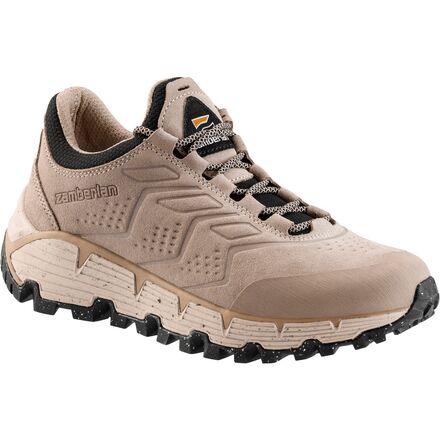
Zamberlan
Metropolis Shoe - Women's
1 color
Current price: $140.00 - $160.00 Original price: $200.00
Up to 30% off
Winter Sale

Zamberlan
Vioz Lux GTX RR Boot - Women's
1 color
$425.00
10% Cashback Eligible

Zamberlan
Vioz GTX Wide Boot - Men's
1 color
$390.00

Zamberlan
Vioz GTX Boot - Women's
1 color
$390.00

Zamberlan
El Cap RR Approach Shoe - Men's
1 color
$275.00
(1)
Related Categories




Frequently Asked Questions
How should I choose a Zamberlan last and fit system for my hiking or backpacking style?
Zamberlan uses multiple lasts—Z-Active for a roomier, comfort-oriented fit suited to fast hiking, ZBPK (Performance Fit) for a firmer heel and forefoot ideal for heavy packs and technical trekking, and ZLF for a women’s-specific shape. Some models (like Lynx FGL GTX RR BOA WL) add a BOA micro-adjust system for precise tensioning, while anatomical footbeds and Active Heel Pads manage cushioning and stability; try boots with the socks you’ll hike in and allow a thumb’s width at the toe for downhill clearance.Which Zamberlan models are best for multi-day backpacking with heavy packs and rough terrain?
Choose models built on the ZBPK/backpacking lasts with thicker full-grain or Perwanger leather uppers (2.8–3.0 mm), a TPU plate or dual-density PU midsole for torsional rigidity, and full rubber rands for abrasion protection—examples include the Guide Lux GTX RR and 971 Guide Lux GTX RR. Pair those with Vibram outsoles designed for braking and self-cleaning lugs and GORE‑TEX linings for wet-weather reliability to handle heavy loads and mixed alpine terrain.How does GORE‑TEX perform in Zamberlan boots and what care do they need?
Zamberlan fits PFAS‑free GORE‑TEX Performance/Extended Comfort membranes behind durable leathers to keep feet dry while allowing moisture vapor to escape, which is especially useful on multi-day treks or wet approaches. To maintain performance, keep leather uppers clean and conditioned with a product suited to Hydrobloc or Perwanger leather, dry boots at room temperature away from direct heat, and reapply water-repellent treatments as needed.How do the different Vibram outsoles on Zamberlan boots affect traction and terrain use?
Vibram compounds and lug patterns are matched to intended use: Megagrip-style compounds (e.g., Junko) favor sticky wet/dry traction and broad contact, NorTrack and Pillow patterns focus on easy-clean lugs and downhill braking on muddy or loose trails, while more aggressive Star Trek II or 3D designs emphasize rock grip and torsional stability for technical terrain. Choose the outsole that matches your terrain—sticky Megagrip for mixed rock and wet routes, self-cleaning lugs for muddy trails, and rugged patterns for scree and alpine talus.How does the 217 Free Blast GTX compare to the Thunder GTX, and which should I pick?
The 217 Free Blast GTX is built for speed and agility—lighter-weight construction, Z‑Active comfort last, and a responsive midsole that suits fast hiking and fastpacking—whereas the Thunder GTX emphasizes stability, thicker leathers, stronger rands, and a stiffer platform geared toward loaded backpacking and rough, technical terrain. Pick the Free Blast GTX if you prioritize mileage and lightness; choose the Thunder GTX if you need more support and durability for heavy packs or extended rugged trips.