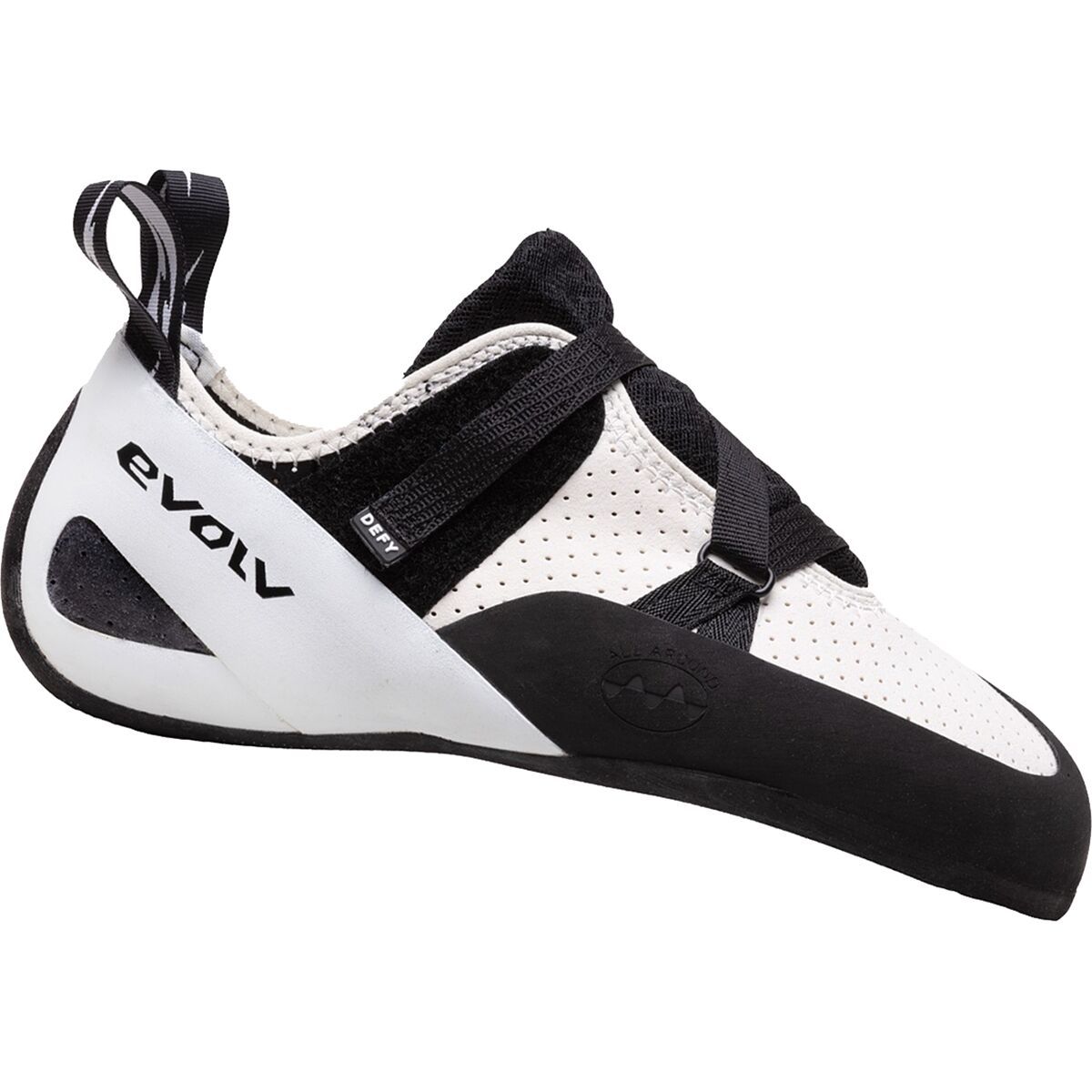
The Evolv Defy typically fits more snug and shape-holding over time, while the Black Diamond Momentum is commonly chosen for a more relaxed, comfort-forward fit that feels forgiving right away.
How does the Evolv Defy feel on the foot?
The Evolv Defy is built around an all-day comfort profile, but it’s not “sloppy.” Its overall shape aims for a secure wrap that stays consistent as you climb—especially important if you’re doing long gym sessions where you don’t want the shoe to feel like it’s stretching into a different size halfway through.
Backcountry’s Gearhead® notes highlight two themes that show up again and again in how people talk about fit: “super comfortable” and “snug fit.” That combination is what makes the Defy a dependable pick when you want comfort without losing the connection to the wall.
If you’re coming from street shoes, the Defy’s climbing-specific feel can still surprise you the first time you put it on—snug through the midfoot, secure at the heel, and stable enough to trust on small footholds without needing an aggressively downturned shape.
What does “Momentum fit” usually mean—and who tends to prefer it?
The Momentum name is often associated with a beginner-friendly, easy-to-live-in feel: something you can keep on longer, take breaks in, and wear through learning phases without constantly thinking about hotspots.
If you’re comparing the two specifically on fit, the question to ask is whether you want a shoe that holds shape and feels supportive (Defy direction) or one that’s commonly chosen when you want less pressure and more immediate comfort (Momentum direction).
That doesn’t mean one is “tight” and the other is “loose”—it’s more about how the fit behaves: how it hugs the foot, how it feels across the toe box, and whether you’re optimizing for long wear, sensitivity, or a balance of both.
Where do the fit differences show up most: toe box, heel, and volume?
Fit differences usually reveal themselves in three places:
1) Toe box feel: If your toes get cranky fast, you’ll notice it immediately. A comfort-oriented shoe should still feel close, but it shouldn’t feel like it’s forcing your toes into an unnatural position for your current climbing style.
2) Heel security: If you’re slipping in the heel, your confidence drops—especially on steep terrain. A secure heel should feel locked in without creating sharp pressure points.
3) Midfoot volume and hold: This is where “snug” can be a good thing. With the Defy, the goal is a secure fit that doesn’t bag out; that’s a big deal if you climb often and want consistency session to session.
For many people, the best approach is to choose the shoe whose fit matches how you actually climb: longer indoor sessions and mileage days call for comfort you can trust, while technique-building benefits from a fit that stays stable and predictable.
How should you choose a size if you’re between two?
Sizing is personal, but the decision framework is simple:
- If you want comfort for longer wear, prioritize the size that feels secure but doesn’t create immediate pain.
- If you want a more performance-leaning feel, prioritize the size that feels snug and precise—as long as circulation and toe pain aren’t dealbreakers.
A good test is to stand, put weight on the toe area as if you’re on a foothold, and notice whether pressure feels even (good) or sharp and localized (a likely problem for long sessions).
Backcountry can help you narrow it down quickly: if you tell us your usual street shoe size and whether you have a narrow/average/wide forefoot, you can often get to the right starting point without burning through a return cycle.
Which fit is better for wide feet, narrow heels, or high arches?
If you have wide feet, the most important thing isn’t the label—it’s whether the shoe creates pressure at the sides of the toe box. If you feel pinching along the outside edge immediately, you’ll likely end up taking the shoes off between burns, which defeats the whole “comfortable session” goal.
If you have a narrow heel, pay attention to lift when you rise onto your toes. Even a comfort-oriented shoe should stay connected at the heel; if it pops up, you’ll feel less stable on steep terrain and your footwork may get tentative.
For high arches, the midfoot hold matters. A shoe that’s comfortable but lacks midfoot structure can feel fine standing around and then feel imprecise on the wall. The Defy’s “snug fit” positioning is often appealing here because it’s designed to feel secure without demanding an aggressively curved profile.
What should a “comfortable but performance-ready” fit feel like?
Comfort in climbing shoes doesn’t mean roomy—it means predictable.
- Your toes should feel close to the front without being crushed.
- The heel should feel secure without sharp pressure.
- The midfoot should feel wrapped so you can trust edges and smears.
If you’re newer to climbing, it’s normal to confuse “tight enough for climbing” with “too tight to be useful.” The right fit lets you focus on movement and technique instead of constantly thinking about your feet.
When does fit matter more than rubber or features?
Fit is the foundation. If you don’t trust the connection between foot and shoe, you won’t use the shoe’s grip the way it was meant to be used.
That’s why a comfort-and-support fit profile (like what the Evolv Defy is designed around) can be such a strong choice: it helps you stay on the wall longer, refine foot placements, and build confidence—especially on days that are more about volume than a single hard send.
And if you’re choosing between two comfort-leaning options, the winner is usually the one that matches your foot shape: toe box comfort + heel security + midfoot hold.