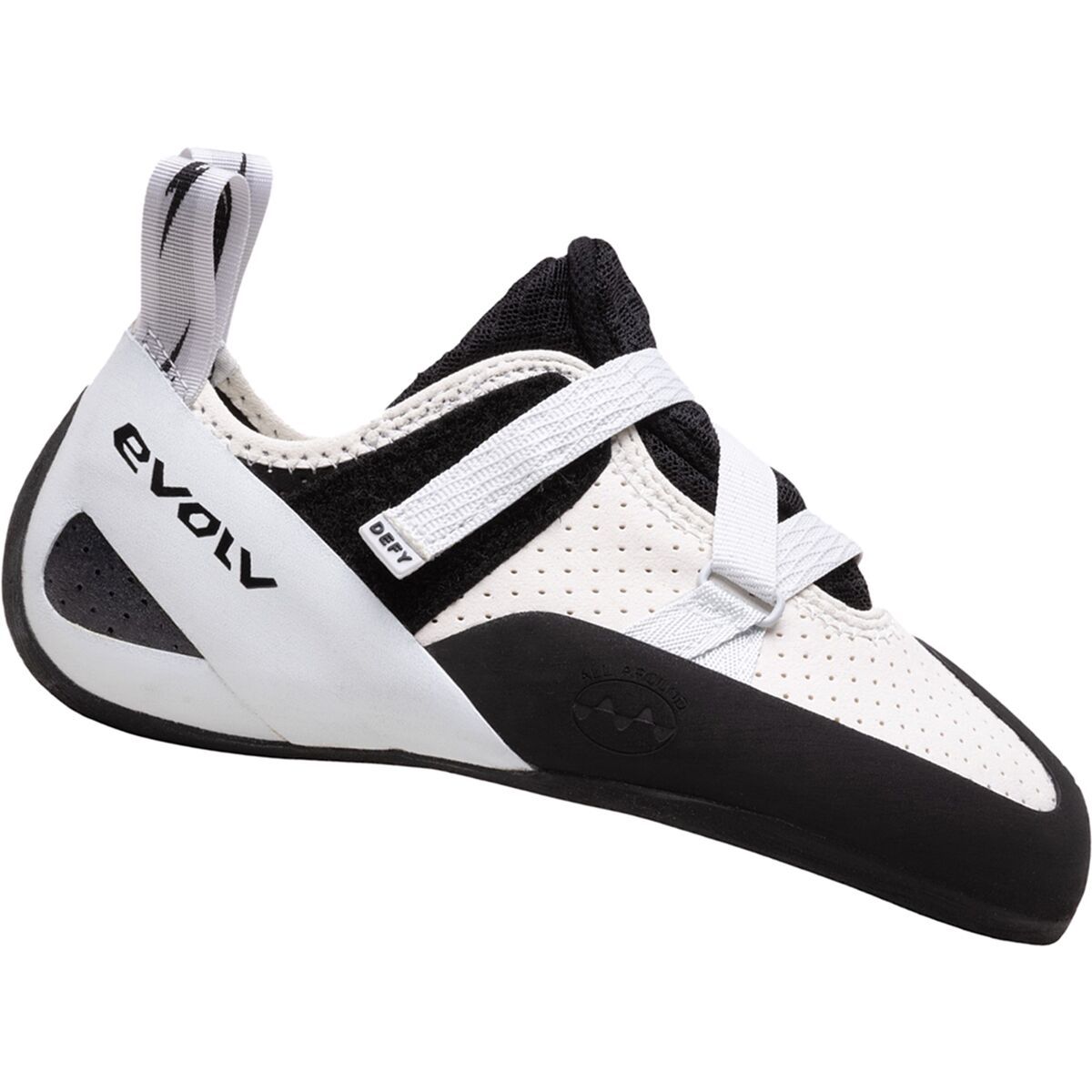
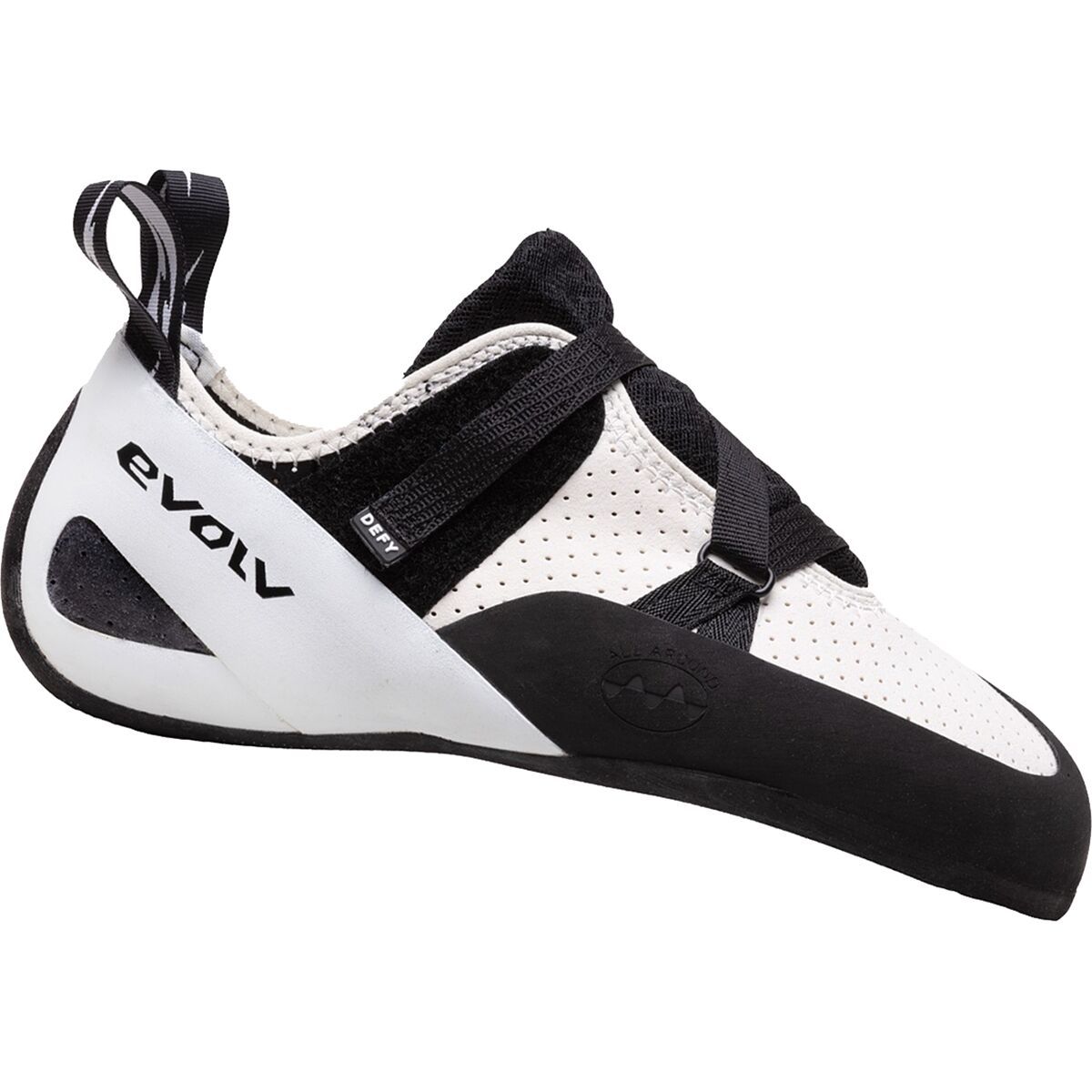
The Evolv Defy is generally a durable choice in its comfort-focused category, thanks to a stretch-resistant upper that helps the fit stay consistent over time and a high-friction rubber outsole built for repeated use—though ultra-aggressive, performance-first shoes may use different constructions that trade long-term comfort (and sometimes longevity) for precision.
How does the Evolv Defy hold up for frequent gym sessions and learning mileage?
If most of your climbing is indoor—lots of warm-ups, technique laps, and longer sessions—the Defy’s durability story is simple: it’s designed to handle repetition without feeling like it “gives up” on you quickly. The flat, low-asymmetry shape is meant to stay comfortable when you’re wearing shoes longer, which matters because discomfort is often what ends sessions early.
Evolv uses a stretch-resistant Synthratek upper that’s intended to keep the fit secure over time rather than relaxing dramatically after break-in. In practical terms, that means fewer surprises when you’re counting on a reliable toe feel session after session.
What materials matter most for durability in the Evolv Defy?
Two areas decide how long a climbing shoe feels “alive”: the upper (how well it keeps structure) and the sole rubber (how quickly it wears and how consistent the grip feels). The Defy pairs a shape that’s built for all-day wear with rubber described as Trax high-friction, positioned as both grippy and durable.
The Defy also includes an odor-resistant mesh lining—not a durability feature in the strict mechanical sense, but it does help shoes stay more pleasant during high-use weeks. Keeping the interior fresher can make it easier to rotate and care for your shoes without dreading them.
How does Evolv Defy durability compare to more aggressive climbing shoes?
Compared to many downturned, high-tension shoes, the Evolv Defy is aimed at dependable performance over long sessions instead of maximum power in short bursts. Aggressive models can concentrate wear differently (especially at the toe) because they’re designed to load the front of the shoe.
With the Defy, the goal is reliable control and confidence on holds while you build footwork and precision. If you’re doing a ton of steep bouldering and toe-dragging, any shoe will wear faster—so the more important comparison is: the Defy is built to be a steady workhorse for consistent days, not a fragile “send-only” tool.
What can you do to make the Evolv Defy last longer?
A few habits can extend the useful life of any climbing shoe—especially a shoe you’ll likely wear for a lot of volume:
- Match the shoe to the session: If you’re doing technique laps, warm-ups, or long routes, the Evolv Defy makes sense; save hyper-abrasive drills for older pairs when possible.
- Keep footwork quiet: Scraping, twisting, and dragging burns rubber faster than most people realize.
- Let them dry between uses: The mesh lining helps, but drying time still matters for comfort and long-term feel.
Evolv designed the Defy to be comfortable for extended days at the gym or crag, and that comfort can support better footwork—which is often the best durability upgrade of all.
Where does the Defy tend to wear first, and what does that mean for longevity?
Most climbing shoes show wear at the front edge and toe area first, because that’s where edging and repeated smearing concentrate pressure. With the Evolv Defy, the design emphasis is “confidence on holds” and “all-day comfort,” which pairs naturally with the kind of climbing that builds skills: lots of attempts, lots of standing on feet, lots of learning.
That mileage is exactly why the stretch-resistant upper matters. Shoes that stretch out quickly can feel “done” even if the rubber isn’t fully worn, simply because the fit gets sloppy. The Defy is designed to help prevent that early fade so the shoe can keep feeling secure as you rack up sessions.
Is the Evolv Defy durable enough for outdoor crag days and multi-pitch?
Yes—within its intended lane. The Defy is described as a great choice for extended gym sessions or multi-pitch adventures, which signals a build intended for longer wear times and steady comfort. For long days outside, comfort and consistent fit often translate into better foot placements late in the day.
If your outdoor focus is extremely sharp micro-edges all day, you may prefer a stiffer or more precision-biased shoe. But for general cragging, moderate terrain, and skill progression, Evolv built the Defy to provide reliable control while staying comfortable enough to keep you moving.
When should you consider the Evolv Defy Lace LV instead?
If you like the Evolv Defy idea but want a more adjustable fit, the Evolv Defy Lace LV adds a lacing system for fine-tuning and is built around a leather upper that molds over time. That can be a different durability feel—more “custom fit over time,” with structure maintained through repeated use.
If you’re between sizes, want a tighter wrap for edging, or simply prefer laces for dialing the same shoe to different days, the Lace LV can be a strong alternative while keeping the Defy’s do-it-all intent.