The best climbing shoes are the ones that match your current skill level and the terrain you climb most—comfortable and supportive for beginners, more precise and responsive for intermediates, and highly sensitive or aggressive for advanced climbers who want maximum control.
How do you choose the right climbing shoe for your level?
A good shoe choice starts with fit and purpose: beginners benefit from a secure but forgiving fit that helps them stay on the wall longer, while more experienced climbers often trade comfort for increased precision on small footholds and steeper angles.
If you’re new, prioritize a shoe that feels snug without feeling like a torture device. Your footwork is still developing, and a shoe you can keep on for a full session will teach you more than an ultra-aggressive model you’re desperate to rip off between climbs.
As you progress, you’ll start noticing where your current shoes hold you back—maybe edging feels vague on tiny holds, or the toe doesn’t feel supportive when you’re standing tall on micro-features. That’s the moment to move toward a more performance-oriented shape.
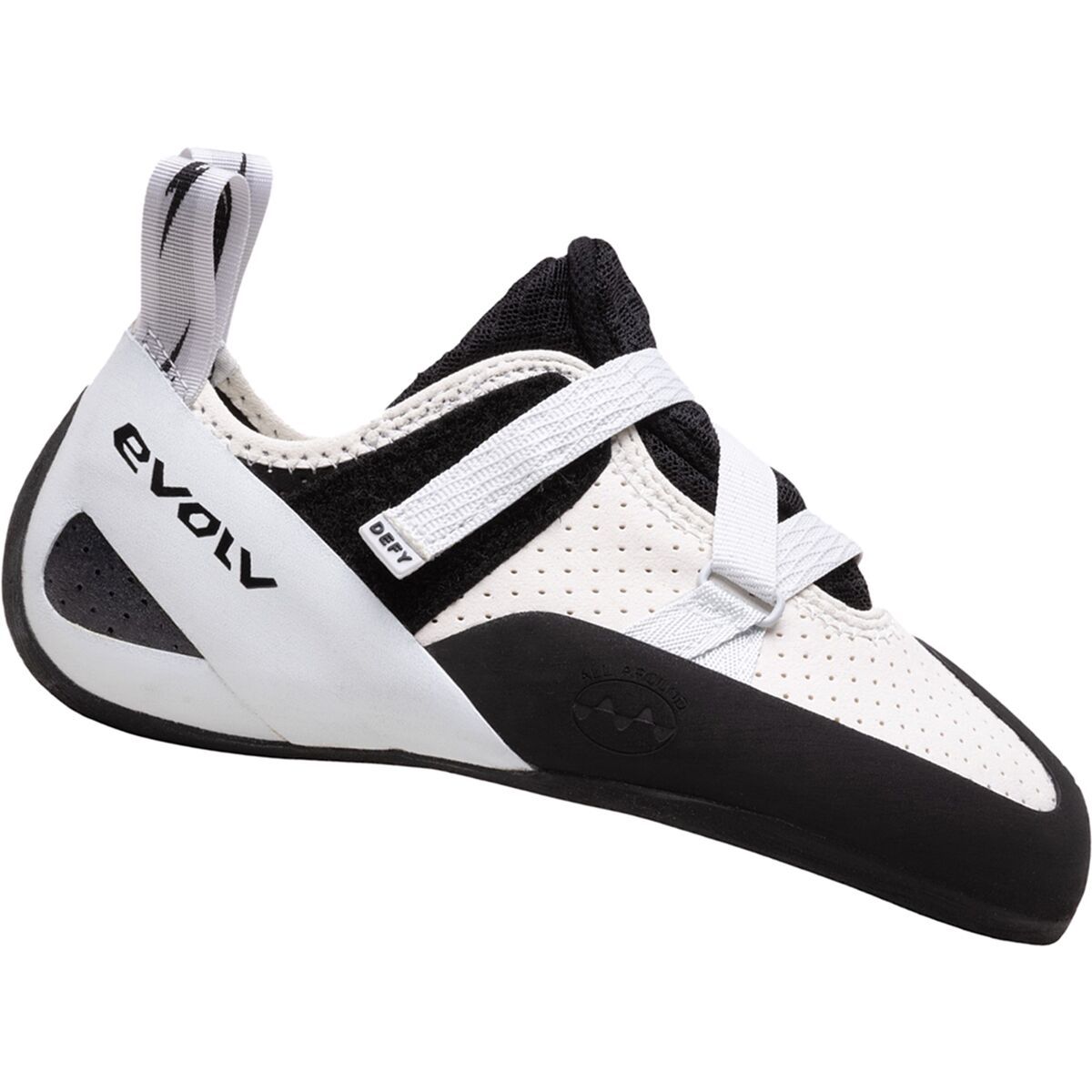
Backcountry carries climbing shoes for different styles and fits; when you’re deciding, think in terms of comfort → precision → sensitivity as your progression ladder.
What are the best climbing shoes for beginners?
For beginners, the “best” shoe is typically a comfortable, confidence-building all-rounder that stays secure and stable on vertical terrain and helps you learn clean foot placements.
A versatile performance shoe like the Tenaya Oasi can make sense for newer climbers who want one shoe that can span a lot of styles—especially if you’re climbing a mix of gym routes, early outdoor days, and a little bit of everything. Its design is built around versatility across angles, with materials and construction aimed at balancing comfort with responsive performance.
If you’re worried about soreness, focus on getting the right volume and shape rather than forcing an ultra-tight size. A shoe that fits your foot well will feel more supportive and predictable, and that predictability matters when you’re learning how to weight your feet instead of pulling with your arms.
Backcountry’s best advice for beginners: pick a shoe you can wear long enough to practice—and upgrade once you can clearly describe what you want “more of” (edging support, toe power, sensitivity, or steep performance).
Which climbing shoes make the most sense for intermediate climbers?
Intermediate climbers usually benefit most from a shoe that feels more precise on edges and more responsive when you change angles, without becoming so aggressive that it only feels good on steep terrain.
The Tenaya Oasi is a strong “do-it-all” style option when your climbing week might include vertical edging, some slabby technique days, and steeper boulders. It’s designed to respond quickly to subtle shifts in weight and foot placement, and its closure system is built to help dial in a secure fit.
If you’re progressing quickly and want a similar performance feel in a lower-volume fit, the Tenaya Oasi LV is built around a snug, supportive platform intended to react instantly to small movements. That lower-volume approach can help eliminate dead space and improve confidence on small footholds—especially when precision starts to matter more than pure comfort.
A practical intermediate check: if you’re taking your shoes off between most attempts because your toes go numb, sizing or shape is probably too extreme. If you’re slipping on heel hooks or feeling like you can’t trust tiny edges, it may be time for a more precise fit or a more performance-oriented model.
What are the best climbing shoes for advanced climbers?
Advanced climbers often look for a shoe that delivers maximum feedback and control—especially when holds are small, terrain is steep, and micro-adjustments decide whether a move sticks.
If sensitivity is your top priority, the Tenaya Mundaka is built for feeling details and staying precise when the sequence is technical. Its construction is aimed at blending softness with enough structure to keep the toe-box supported on small edges, and it’s reinforced for toe hooking and abrasion resistance.
At this stage, “best” is less about a universal pick and more about matching the shoe to the job. A more sensitive shoe can feel incredible on steep, technical climbing, while a more supportive shoe can feel more trustworthy for long edging sequences or extended sessions.
Backcountry’s simplest way to choose as an advanced climber: decide whether you want (1) sensitivity, (2) edging support, or (3) all-around versatility most—and pick the shoe shaped for that priority rather than hoping one model will feel perfect for everything.
How should climbing shoes fit for each level?
Fit is the make-or-break detail, and it changes subtly as you progress.
For beginners, you’re aiming for snug and secure—no dead space in the toes or heel—but still realistic for learning sessions. You should be able to stand and walk short distances without feeling like you’re fighting the shoe.
For intermediates, you’ll usually want a tighter, more performance-oriented fit that improves precision on small footholds. The goal isn’t pain for its own sake—it’s reducing slop so power transfers cleanly when you edge or smear.
For advanced climbers, fit becomes purpose-built. Some climbers size tighter for steep boulders and toe-hooking, and keep a slightly more comfortable performance fit for longer sessions or routes where endurance matters. If you can’t trust your heel during hooks or your toes feel vague on edges, it’s often a fit/volume issue—not a strength issue.