Cat 1–3 vs Cat 4: where this Diverge-style build shines
On Cat 1–3 gravel, the big upside is speed without white-knuckle handling; on Cat 4, the upside is control, but the tradeoff is you’ll want to be more intentional about setup and line choice.
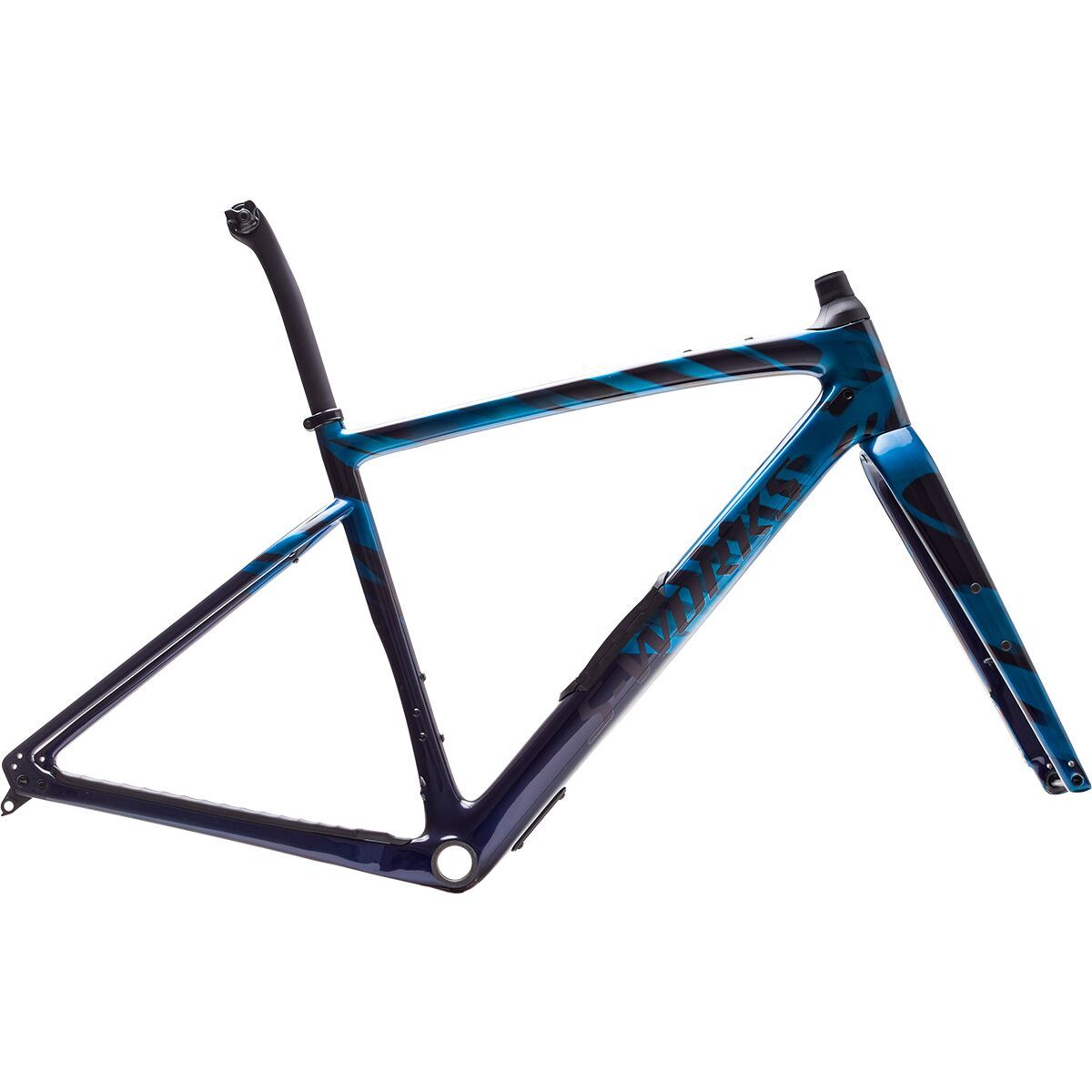
Why? The platform we can speak to from the data—the Specialized S-Works Diverge Frameset—is designed around a lightweight carbon frame (FACT 11r, under 1000g) paired with a progressive geometry that blends responsiveness with stability. That combo tends to feel right at home on faster gravel where you’re pushing pace, accelerating often, and still dealing with washboard, loose-over-hard, and the occasional surprise rut.
Step into Cat 4 and the “pros” shift: the slacker head tube angle, shorter-stem intent, and lower bottom bracket are all about staying planted and predictable when the surface gets rougher. The “cons” aren’t dealbreakers—they’re realities. A lower bottom bracket can mean you pay more attention to pedal timing in chunky sections, and Cat 4 terrain can demand more from tire choice and pressure to keep comfort and traction where you want them.
- Best match: Cat 1–3 speed days, mixed-surface training, and race-pace gravel.
- Still viable: Cat 4, if you prioritize stability and run appropriately large tires.
What the frame brings to the party (and why it matters)
Think of this as a “go fast, stay calm” recipe. The FACT 11r carbon construction keeps weight down (Specialized lists it at under 1000 grams), which is a real advantage when you’re surging out of corners, closing gaps, or trying to keep momentum on rolling gravel.
Progressive geometry: composed when it gets rowdy
The geometry details in the product data point to a ride that’s stable without feeling like a barge:
- Slacker head tube angle: helps the front end feel more confident when the surface gets loose or chattery.
- Shorter-stem intent: supports quicker steering inputs when you need to thread a line or correct mid-corner.
- Low bottom bracket: adds a planted feel—great for carving fast gravel turns and staying centered.
Tire clearance: the quiet hero for Cat 4 days
Big tire clearance is called out directly, and it’s the lever you’ll pull most when moving from Cat 1–3 to Cat 4. More volume can mean more comfort and more grip—two things that matter a lot when the trail turns from “fast gravel” into “why is this road angry?”
Net-net: the frame’s strengths are efficiency, stability, and versatility. The more your rides lean toward rougher categories, the more your tire choice becomes part of the performance package.
How to choose between Cat 1–3 focus vs Cat 4 focus
If your routes bounce between smooth hardpack and rougher backroads, the decision isn’t “can it do it?”—it’s “what do you want it to feel like?” Use these checkpoints to decide if a Diverge-style geometry is your kind of fast.
Pick your priority: pace or forgiveness
- If Cat 1–3 is your home base: prioritize the lightweight carbon advantage and the responsive/stable handling balance. You’ll feel it most on accelerations and long, fast stretches where staying efficient matters.
- If Cat 4 shows up often: prioritize stability and tire volume. The geometry is already aimed at control; your job is to lean into the clearance and run tires that take the edge off.
Geometry cues to match your terrain
The data calls out three key cues—slacker head tube angle, shorter stems, and a low bottom bracket. Together, that usually means confident descending and cornering, with a planted center of gravity. If your Cat 4 rides include lots of embedded rock or deep ruts, remember the low bottom bracket can reward clean pedal timing.
Quick self-check before you commit
- Do you want a bike that feels stable at speed on rough surfaces? (This geometry says yes.)
- Are you willing to tune comfort and traction primarily through tire choice? (Clearance says you can.)
- Do your roughest rides demand maximum clearance and constant pedal strikes avoidance? (If yes, be honest about how “Cat 4” your Cat 4 really is.)
Why shop this decision with Backcountry
Gravel categories are a moving target—one person’s Cat 3 is another person’s “this is basically a creek bed.” That’s why we like to talk in real-world tradeoffs: weight vs durability feel, stability vs agility, and how geometry choices show up when you’re tired and still trying to hold a line.
Backcountry is built for that kind of gear decision. You’re not just picking a frame—you’re picking how you want your bike to behave when the pace lifts and the surface gets unpredictable. If you want a second set of eyes on whether a lightweight carbon gravel platform with progressive geometry and big tire clearance matches your routes, our Gearhead® Expert crew is here to talk it through like a riding buddy who’s done the homework.
Bring your usual terrain, your “roughest day” route, and what you want to feel more of (speed? stability? both?). We’ll help you land on the right direction—without the guesswork.