Is Connect Adjust the right tool for aid?
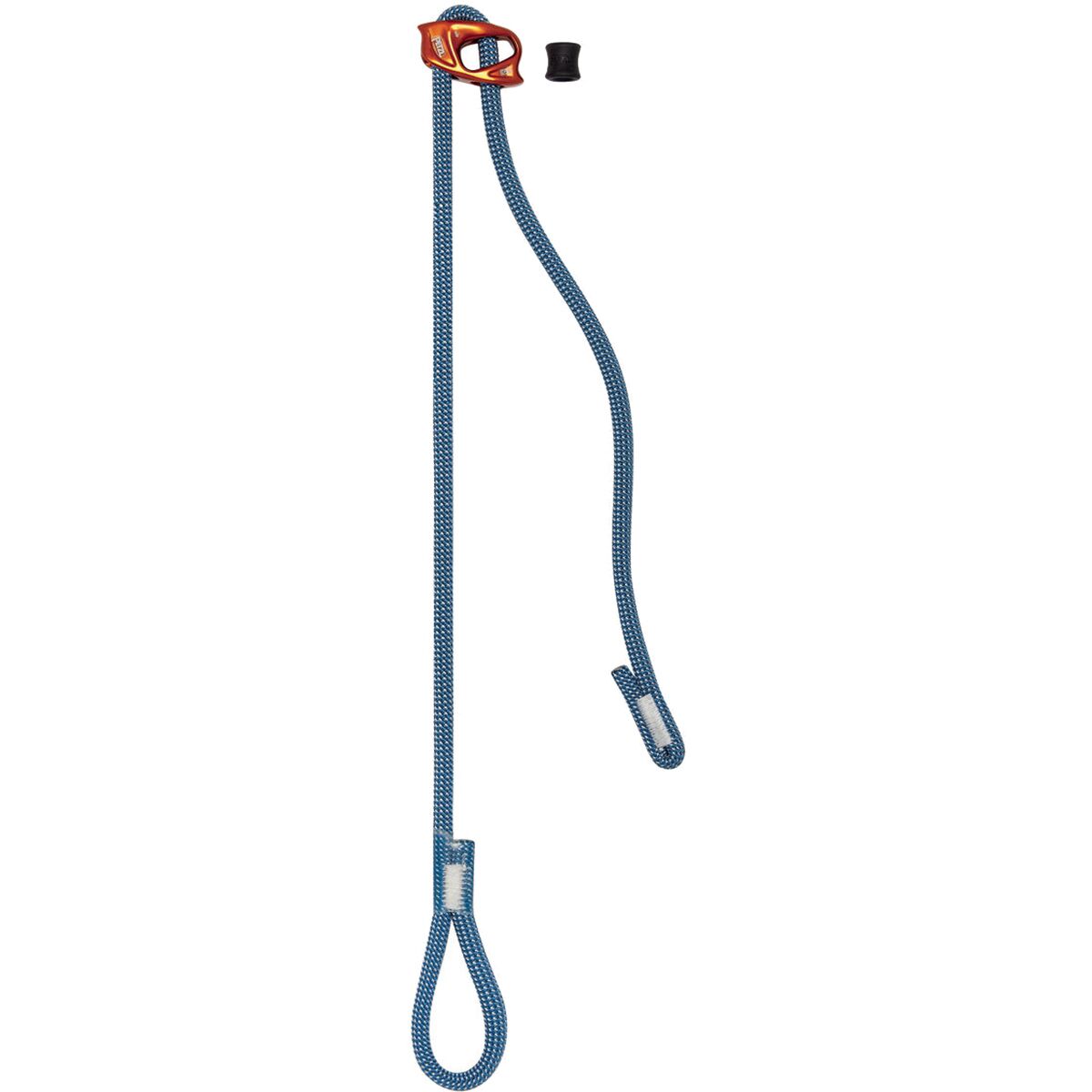
No—the Petzl Connect Adjust is positioned in the product details as a personal anchor system for multi-pitch belays, not as an aid-climbing positioning device. It’s designed to girth hitch to your belay loop and let you adjust length one-handed once you’re clipped to an anchor, so you can get organized and bring your partner up sooner.
If your goal is aid climbing—especially moving efficiently through steep sections where you’re constantly changing your distance to the wall—the more purpose-built option in this lineup is the Petzl Evolv Adjust. Its description calls out aid climbing directly and notes a setup with two adjustable arms that connect to aid equipment to bring you closer to a higher piece, lower you to a lower piece, or fine-tune your stance.
Where Connect Adjust fits in
Think of Connect Adjust as your “clean belay station” tool: clip, adjust, and manage the stance without fumbling. One version also includes a retainer for your locking carabiner (sold separately) to help prevent cross-loading, plus a rear loop detail meant to make unblocking simpler when weighted (using a tied cord).
Quick takeaway
For aid: prioritize Evolv Adjust (or Dual Evolv Adjust Lanyard). For anchor management on multi-pitch: Connect Adjust is right in its lane.
What you get with Petzl’s adjust-style lanyards
The common win across these Petzl lanyards is speed and control at the moments that usually feel the most chaotic—arriving at the anchor, getting clipped, and dialing your stance. The adjuster designs called out in the product details emphasize quick length changes, including single-hand operation on the Connect Adjust and Dual Connect Adjust, so you can keep one hand doing the important stuff while the other tunes your distance.
Connect Adjust: anchor efficiency, simplified
Connect Adjust attaches to your belay loop with a simple girth hitch. Once you’re clipped in, the tube-style adjuster lets you change length quickly. One listing also notes a retainer that slips onto a locking carabiner (carabiner sold separately) to help keep the setup oriented and reduce cross-loading risk. That’s a small detail that can make a big difference when you’re swapping tasks at a hanging stance.
Dual Connect Adjust: cleaner transitions
If you like a more organized station flow, the Dual Connect Adjust adds a fixed arm you can use to connect a rappel device once you’re secure. It also includes a rubber ring that slips on your carabiner (sold separately) to help prevent cross-loading while adjusting.
Evolv Adjust family: aid-focused positioning
For aid movement, Evolv Adjust and Dual Evolv Adjust Lanyard bring the “move in/move out” advantage with two adjustable arms meant to minimize slack and keep your position where you want it.
How to choose the right Petzl adjuster for aid vs. anchors
If you’re deciding whether Connect Adjust belongs on an aid rack, the easiest filter is this: Do you need a personal anchor at belays, or a positioning tool for moving between pieces? The product descriptions separate those jobs pretty clearly.
Pick Connect Adjust if your priority is belay stations
- Multi-pitch anchor management: It’s described as a personal anchor system you girth hitch to the belay loop and adjust once clipped.
- Fast stance tuning: The ergonomic adjust device is called out for one-handed length selection.
- Orientation help: One version includes a retainer for a locking carabiner (sold separately) to reduce cross-loading.
Pick Evolv Adjust (or Dual Evolv Adjust Lanyard) if you’re actually aiding
- Aid-specific use case: Evolv Adjust is explicitly described for making aid climbing through overhanging sections easier by changing your distance to the wall.
- Two-arm positioning: Two adjustable arms connect to aid equipment so you can move up to the higher piece or drop back to the lower one.
- Slack management: Dual Evolv Adjust Lanyard notes two adjustable arms to minimize slack and shock.
Also consider adding ascenders for big-wall systems
If your “aid climbing” question includes jugging, hauling, or rescue-style setups, Petzl’s Tibloc Ultralight Emergency Ascender and the Ascension Handled Ascender are described for those rope tasks—separate tools from an anchor/positioning lanyard.
Why shop this setup at Backcountry
When you’re sorting “anchor tool” vs. “aid positioning,” the details matter—like whether a lanyard is described as a personal anchor system, or whether it’s built around two adjustable arms meant to connect to aid equipment. That’s exactly the kind of nuance we love digging into, because it keeps your kit clean and your systems intentional.
If you want a second set of eyes before you commit, our Gearhead® Expert team can help you compare Connect Adjust, Dual Connect Adjust, Evolv Adjust, and Dual Evolv Adjust Lanyard based on how you actually climb—multi-pitch transitions, steep aiding, or a little of both.
Bottom line: pick gear that’s in its lane, and you’ll move faster, fumble less, and spend more time doing the fun part—climbing.